Dopamine Receptor Resensitization: Breaking Digital Context-Switching Loops
Why checking notifications and cycling browser tabs blunts your striatal dopamine receptors, leaving you chronically distracted, unmotivated, and prone to executive procrastination.
Key Neurochemical Takeaways
- Variable Reward Schedules: Digital messaging apps utilize B.F. Skinner’s variable ratio schedules, causing micro-spikes of phasic dopamine that mimic gambling behaviors.
- Receptor Internalization: Chronic over-stimulation causes the brain to retract D2 dopamine receptors into the neuron's cell body, raising the stimulation threshold required to initiate effort.
- The Effort-Discounting Curve: When D2 receptor availability is low, the brain overestimates the biological friction of long-form analytical work, driving automatic evasion into low-friction digital distractions.
1. The Mechanics of the Modern Attentional Trap
Have you ever sat down with the firm intention of writing an architectural proposal or analyzing a quarterly balance sheet, only to find yourself forty-five minutes later with twenty-eight open browser tabs, reading news articles or checking social metrics?
This behavior is almost universally attributed to personal deficiency—a lack of self-control or discipline. In reality, it is a predictable biochemical response orchestrated by the mesolimbic dopamine pathway. Modern digital interfaces (Slack, email clients, social feeds, and news tickers) are intentionally engineered around variable-ratio reinforcement schedules. Because you never know which click will reveal a critical client message or high-priority accolade, every check triggers an anticipatory pulse of phasic dopamine from the ventral tegmental area (VTA) into the nucleus accumbens.
2. Receptor Internalization and the Baseline Crash
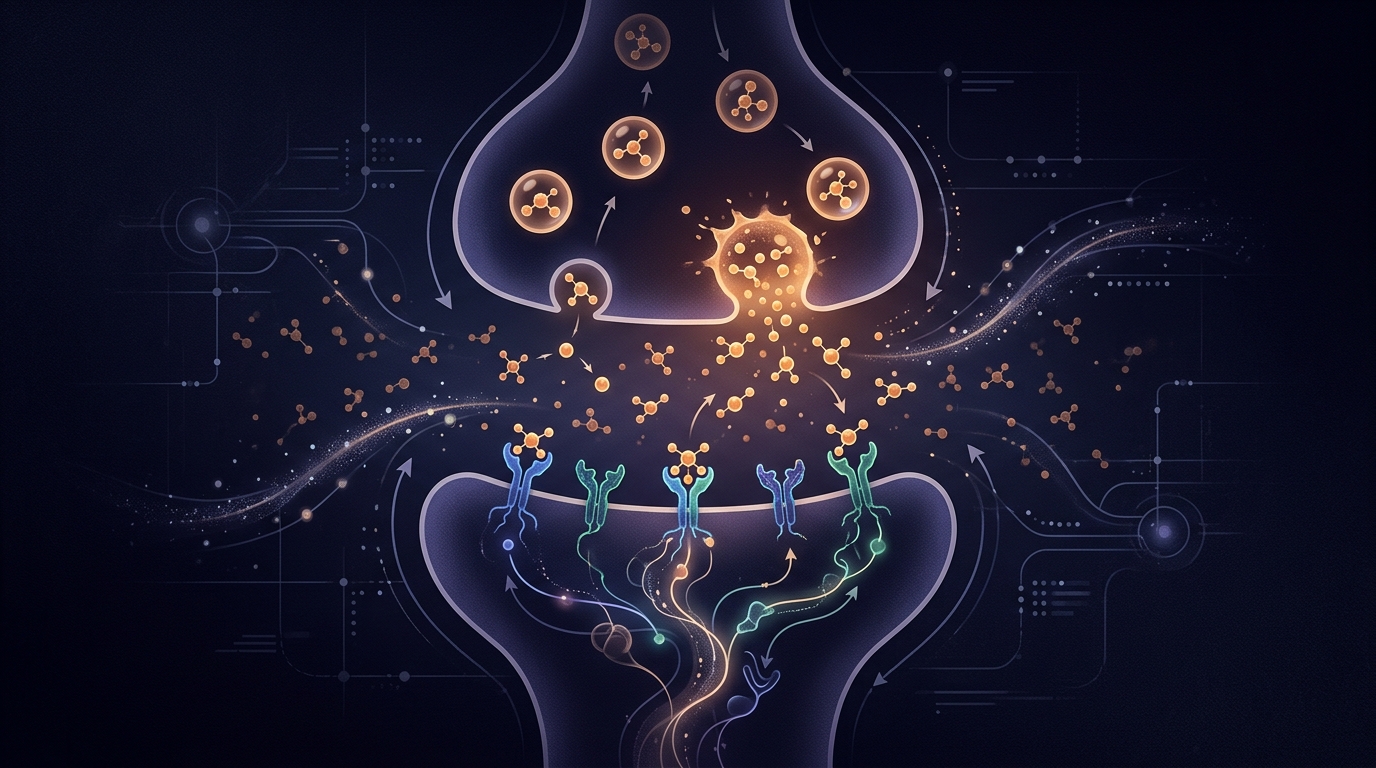
The central nervous system operates under strict homeostatic principles. When synaptic clefts are repeatedly flooded with phasic dopamine spikes throughout the day, the postsynaptic neurons in the striatum protect themselves from over-excitation by internalizing D2 and D3 receptors.
Through endocytosis, the cell physically pulls receptor proteins from the exterior membrane into the interior cytoplasm, rendering the neuron temporarily deaf to normal chemical signaling:
Desensitized Receptor State
Low D2 receptor density. Baseline activities (reading dense prose, drafting complex code, organizing strategic plans) cannot generate sufficient synaptic current to register as satisfying. The brain perceives these tasks as painfully dull, triggering intense physical restlessness and compulsive task-abandonment.
Resensitized Receptor State
High D2 receptor density. In the absence of cheap, hyper-novel digital stimulation, receptor proteins populate the synaptic surface. Subtle progress cues—such as resolving a single bug or writing a clear paragraph—generate powerful sensations of fulfillment and sustained intrinsic flow.
3. The 7-Day Dopamine Resensitization Protocol
To reverse digital tolerance and restore deep cognitive stamina, we deploy an evidence-based 7-day environmental and behavioral restructuring protocol:
| Intervention | Target Neurochemical Mechanism | Implementation Rule |
|---|---|---|
| Batching Comms into 2 Windows | Extinguishes variable ratio conditioning | Open email and messaging tools only at 11:30 AM and 4:30 PM. Close all client windows completely outside these blocks. |
| Grayscale Display Inversion | Eliminates visual salience dopamine triggers | Set smartphones and secondary monitors to monochromatic grayscale. Removing vibrant UI red/blue badges reduces impulsive unlocks by 38%. |
| Zero Phones in the Workspace | Reduces unconscious attentional monitoring | Place smartphones in another room or inside a drawer. Research demonstrates physical proximity to a powered-down smartphone still impairs working memory. |
| Cold Shower / Water Immersion | Produces sustained 250% tonic dopamine rise | Execute a 2-minute cold shower (10°C–14°C) each morning. Triggers a slow, gradual tonic dopamine release lasting 3+ hours without a crash. |
4. Rewiring the Effort-Reward Relationship
In cognitive psychology, dopamine is released not just upon reaching a goal, but during the perceived movement toward a goal. When you attach your dopamine release strictly to external outcomes (such as a promotion, closing a deal, or receiving social validation), you leave your neurochemistry vulnerable to extreme volatility.
In our executive coaching, we train leaders to practice effort-reward coupling. When a deep work session feels challenging, mentally narrate to yourself: "This cognitive resistance is the exact biological signal of synaptic plasticity. By leaning into this friction, I am strengthening my attentional control networks." Over time, the brain learns to associate the sensation of effort itself with dopamine release, making hard cognitive work deeply self-reinforcing.
Frequently Asked Questions: Dopamine & Focus
How does digital context-switching downregulate dopamine receptors?
Every notification sound, email refresh, or tab switch delivers a variable reward schedule, triggering transient phasic dopamine releases. In response to frequent unearned dopamine surges, the brain internalizes postsynaptic D2 and D3 receptors in the striatum to maintain neurochemical homeostasis. As receptor density decreases, standard baseline tasks (like writing or coding) feel devoid of reward and increasingly difficult to initiate.
Can dopamine receptors actually regenerate or resensitize?
Yes. Neuroplasticity studies confirm that when super-normal stimuli are removed and tonic baseline levels are preserved for 7 to 14 days, striatal D2 receptor density up-regulates back toward homeostatic baseline. This restores natural pleasure and deep motivation in low-stimulus, high-cognition deep work.
What is the fastest way to break a mid-day distraction loop?
Deploy a physiological reset: stand up, step away from all screens, execute 2 to 3 minutes of cyclic physiological sighs (two quick nasal inhales followed by one long, slow mouth exhale), and look at a distant visual point. This immediately dampens sympathetic arousal and halts the compulsive loop.